High Voltage vs Low Voltage Battery Storage: Which Is Better for Solar Energy Systems?
As solar energy adoption continues to grow worldwide, more homeowners and businesses are adding battery storage systems to improve energy independence and reduce electricity costs.
One of the most common questions buyers ask is:
Should I choose a high voltage battery system or a low voltage battery system?
While both technologies can store solar energy effectively, they differ significantly in efficiency, installation requirements, scalability, and application scenarios.
This guide explains the main differences and helps you determine which solution is best for your project.
What Is a Low Voltage Battery Storage System?
A low voltage battery system typically operates below 60V, with 48V LiFePO4 batteries being the most common option in residential solar applications.
These systems are widely used because they are:
- Easy to install
- Compatible with many residential inverters
- Cost-effective for smaller systems
- Popular in off-grid and backup power applications
Typical applications include:
- Residential solar storage
- RV power systems
- Small off-grid cabins
- Backup power systems
What Is a High Voltage Battery Storage System?
A high voltage battery storage system generally operates above 100V and can reach several hundred volts depending on system design.
High voltage batteries are increasingly used in:
- Commercial solar projects
- Industrial energy storage
- Large residential systems
- Microgrids
- Utility-scale energy storage
Because the voltage is higher, the same power can be delivered with lower current.
This provides several efficiency advantages.
Efficiency Comparison
One of the biggest benefits of high voltage battery systems is improved energy efficiency.
Lower current means:
- Reduced cable losses
- Lower heat generation
- Better inverter efficiency
- Improved overall system performance
For large-scale solar projects, these efficiency gains can significantly impact long-term operating costs.
Low voltage systems remain efficient for smaller installations, but high voltage systems often outperform them as system size increases.
Installation and Wiring
Low Voltage Systems
Advantages:
- Simpler wiring
- Easier maintenance
- Familiar to many installers
Disadvantages:
- Larger cable sizes required
- Higher current flow
- More wiring complexity in large systems
High Voltage Systems
Advantages:
- Reduced cable requirements
- Cleaner system design
- Better suited for large capacities
Disadvantages:
- Requires trained installers
- Higher safety requirements
- Specific inverter compatibility needed
Scalability and Expansion
As energy demand grows, many users want the ability to expand their battery capacity.
This is where modular high voltage battery systems offer a significant advantage.
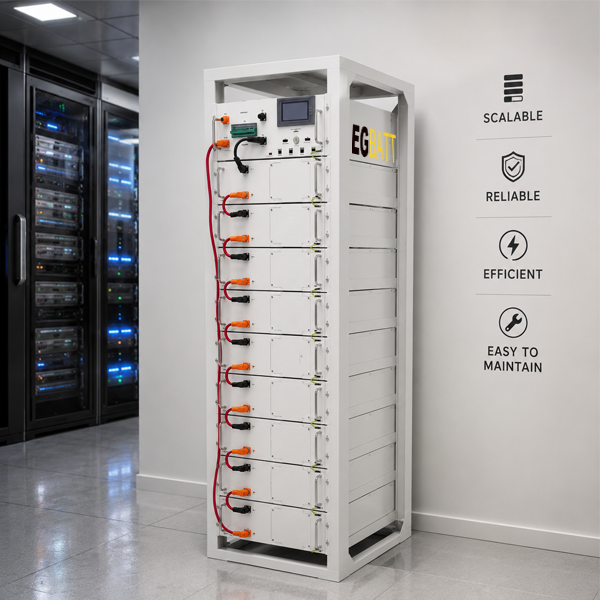
Many modern rack-mounted battery systems allow users to:
- Add battery modules as needed
- Increase system voltage and capacity
- Expand without replacing the original system
For commercial energy storage projects, scalability is often a critical purchasing factor.
Cost Considerations
Initial equipment costs may vary depending on project size and inverter compatibility.
In general:
Low Voltage Batteries
- Lower initial investment
- Suitable for smaller systems
- Ideal for residential applications
High Voltage Batteries
- Better efficiency at scale
- Lower installation costs for large projects
- Improved return on investment over time
For commercial and industrial projects, the long-term economics often favor high voltage solutions.
Which Battery System Is Best for Solar Storage?
The answer depends on your application.
Choose Low Voltage Battery Storage If:
- You have a small residential solar system
- Budget is the primary concern
- Capacity requirements are relatively low
- You need a straightforward installation
Choose High Voltage Battery Storage If:
- You are building a commercial ESS project
- Large energy capacity is required
- Future expansion is planned
- Maximum efficiency is important
Frequently Asked Questions
Are high voltage batteries more efficient?
Yes. Higher voltage reduces current, which minimizes power losses and improves overall system efficiency.
Are low voltage batteries safer?
Both systems can be safe when properly designed and installed. Modern LiFePO4 batteries include multiple protection mechanisms regardless of voltage level.
Can high voltage batteries be used with solar systems?
Absolutely. Many commercial and hybrid solar inverters are specifically designed for high voltage battery storage systems.
Which battery type is better for commercial projects?
High voltage battery systems are generally preferred for commercial and industrial energy storage because of their efficiency and scalability advantages.
Final Thoughts
Both high voltage and low voltage battery storage systems have important roles in today's solar energy market.
Low voltage batteries remain an excellent solution for residential and small off-grid installations, while high voltage battery systems are becoming the preferred choice for commercial and industrial energy storage projects.
Understanding the differences between the two technologies can help system owners maximize performance, reduce energy costs, and build a more reliable energy infrastructure.

评论
发表评论